Beloved friends,
I am just home after a winter holiday in the sun. On the airplane, amongst the clouds, I adapted my most recent Workshop for Living lecture to share with you. I hope that it offers you comfort. It's a longer piece, a little gift after my time away.
I will speak to the war below, in Resistance.
Love,
Dahlia
Love, Boundaries, and Revolution
Two years ago in my Workshop for Living, we had a fascinating snarl. The focus of the workshops that year was lovingkindness. Anger was coming up for a lot of people in their personal lives, so in our guided meditation I suggested holding that feeling in loving awareness and bringing our friendly curiosity to learn what was causing it to arise so that the need behind it could be identified, understood, and met with kindness. In my experience, holding anger in friendly curiosity — which is the tone we aim to bring to all living in my way — allows us to understand the needs it is communicating so that we can meet them kindly, which is a gentler path to understanding and meeting needs than anger is.
For some people, this was a lovely idea. For some people, it was horrible, with reactions ranging from dismay to outrage. This happened in the next to last session of the workshop so I had to do some fast work to figure out what was going on!
What I discovered through the generosity of the people willing to explore this with me was that for people who were taught that love means putting others first, honoring that dictate means minimizing needs and boundaries, so anger felt like the only tool they had for the expression of needs and self-protection. One person said that they were raised: “God first, others second, self last.” We all hear the absurd maxim that “Love means never having to say you’re sorry."
In the framework of conditional worth and conditional love, love is a reward for being good – which is being pleasing for others. Withdrawal of love is a punishment for being bad - for being displeasing to others. The fact that most adults have been socialized this way as children entirely tangles our worth with how pleasing we are to others.
In that framework, “unconditional love” means: love that doesn’t have any boundaries, any needs or limits, because any time you say no, that’s a withdrawal of affection, which is a punishment, a rejection which means the person you are saying no to is unworthy of love and bad. This makes it hard to say no or express your own needs. It makes it hard to ask for anything if you are considerate because you know the other person isn’t supposed to say no. When unconditional love happens inside a larger framework of conditional love, it is terrifying! It is also painted as beautiful and rightful. How many of us were read “The Giving Tree” as children, where a female tree gives to a male child that she loves until she is reduced to a stump? Love as sacrifice can be a terrible thing.
Understanding this helped me to feel into why so many people struggle with boundaries or with anger: if you can’t say no or express any needs kindly, then anger is the only way to get there. This makes anger, for some folks, an essential bridge to expressing any kind of need, or having limits for safety.
-
Lovingkindness, by which I mean spiritually founded unconditional love, disentangles this. Love is not a reward or a punishment; love is not a tool; it is not a judgement of worth. If life is precious, and we are life, we are inherently worthy. Everything is.
I sing this in my prayersong:
All of this is the life of the universe, dancing.
I am the life of the universe.
I am loving awareness.
I believe that loving awareness is the nature of our human existence. When we are not ailing or frightened, we feel our natural loving awareness. What is a baby when they are not in pain or frightened? Friendly curiosity and awe incarnate. The nature of our existence is love.
The curious, friendly stance of lovingkindness is revolutionary in relationship. It makes it easy to set boundaries — which just means communicating about our needs — because it’s not about rejection or punishment. Our needs and boundaries are not a judgement. They are not about the person we are relating with at all. They are about us, about how we want to be treated in order to feel that it is safe and worthwhile to engage and connect, to be in relationship.
“Boundaries” is a social shorthand for needs and limits. Communicating about our needs and limits is a loving thing to do for ourselves because it makes us safer, and that frees us to be more connected. Communicating about our needs and limits is a loving thing to do for others because it gives them the opportunity to know us, to understand us, and to connect with us more deeply. Contrary to how it appears from the stance of conditional love, the expression of boundaries is not a barrier to love, it is an invitation to healthy relating and deeper connection.
In my opinion the cultural hullabaloo about boundaries is part of the shift afoot from conditional to unconditional love in child-rearing, which means in families more widely. This is related to the wider liberation of all people from patriarchy and misogyny, which is freeing women from the obligation to center the comfort of men and freeing men to have feelings. Patriarchy allows men to have needs — and centers those needs — but they aren’t supposed to have vulnerable feelings.
I don’t want to fail to include nonbinary people: blessings and thanks to you/them for the beauty and bravery of your/their willingness to be known as you/they know your/themselves and in doing so to help us tear the binary down. May all the binaries unravel into glorious complexities.
With this revolutionary change afoot, everyone has more needs and feelings, and it’s a lot! Inviting the full blossom of unconditional love helps.
In the conditional model we communicate our needs by the bestowing or removal of love. This is indirect and painful. In the unconditional model, love just is. Communicating our needs is an entirely separate matter. It’s so much less painful and more connective and effective.
-
One of the things that fascinated me the most in that snarl where people were upset when I asked them to hold their anger in friendly, loving, curiosity was that a lot of the people who were upset about doing that were people who would be socially coded as “nice”. It makes sense that if you’ve been taught that love means you always have to put other people first — because saying no is a rejection, is a lack of love — and you are a loving person, then you can never say no and you’re going to read as “nice” — and you’re likely to be really angry because you never get to have any needs or limits.
Lovingkindness is not nice. Lovingkindness frees you to be clear, powerful, even fierce. I think I’ve got a pretty solid lovingkindness going these days, and I am not socially coded as nice. A friend once said, “Oh, I know I can ask the Homes anything because they will say no to you.” I will! And I will express my needs to you. I will say hard things to you, too – kindly, I hope, in service of truer connection and everyone's wellbeing.
I am going to cuss here because it is central to the cultural point I am making: to some people, this makes me a bitch. Because a bitch is a woman who is willing to say hard things, who is willing not to center everyone else’s comfort at the expense of her own. It’s a word we use to punish women for expressing boundaries, needs, and limits.
So, I’m not necessarily nice. But what I am is safe. You know where you stand with me. You don’t have to guess what I need in order to be in relationship with me. I’m not judging you. And my love is unwavering.
Unconditional love and clear communication create excellent boundaries. In my experience, it’s a wonderful way to live. I’m not perfect at lovingkindness, but the longer I try, the more I unwind judgement, the deeper I go into friendly curiosity and love, and into freedom, peace, and power. I'm grateful to be on this path with you, and learning with and from so many of you.
For me, feeling my connection to the life of the universe, knowing myself as the life of the universe, dancing, is the root of this process. The more we belong to the life of the Earth and the life of the cosmos, the more we belong to life: the more we belong. The more we belong, the more we are awash in love. Being is belonging is love. Love is the foundation of our existence. This is a medicine for unworthiness and conditional love. Belonging to life helps us to heal ourselves, heal our relationships, and is a means to healing the world.
Resources
Go Forward in the Courage of Your Love
The song "The Sound of My Feet on this Earth is a Song to Your Spirit" contains the refrain, "Go forward in the courage of your love", which weaves onward through GOLD, which has been often on our turntable. Alabaster de Plume is Angus Fairbanks, an English poet, jazz musician, saxophonist, and activist. If I am introducing you to him, oh, joy! What a gift he is and has and offers: in music, in heart, in poetry. Here's the album on Bandcamp. Thanks to James
 Harper
How to Feel Loved
Sonja Lyubomirsky and Harry T. Reis are happiness researchers. Having fought the fight about subtitling a book with an editor myself, I encourage you to look past the me-centered, get-centered tone of the subtitle here and lean your curious heart toward the main course: How to Feel Loved, which explores how our social skills support our capacity for relationship. I've enjoyed interviews with the authors so much that I'll be sharing another one next week! In this one, the NY Times summarizes that, "The authors believe giving and receiving love function together like a seesaw: You lift a person up with the weight of your curiosity and attentiveness — and they do the same in turn." This resonates sweetly for me with the focus in my own teaching on curious, friendly presence as the baseline that we are and that we seek to nurture in spiritual practice and relationship. NYT gift link. Thanks to Kirsten
Taming the Firehose
We're avid supporters of journalism here in our household, so the way that the rapid concentration of wealth and power afoot in these times is affecting our long-respected news institutions is heartbreaking. Watching the media avoid the word war when we are waging war is filling my heart with holy fire. I'm hearing a lot about Ground News from trusted, smart, highly politically aware people. Ground News tracks different stories to show how they are being reported on by a wide swath of media, with clear labelling of known biases and level of factuality for each source. Subscriptions start at the odd and delightfully low point of 83 cents a month. I'm leaning toward giving this a try.
Live this Saturday, March 7
This weekend I have the honor of being a guest at satsang with my friend and teacher Swami Ramananda of the San Francisco Integral Yoga Institute. We'll be speaking from 5:30-6:30 on the topic of The Deepest Form of Healing. "Yoga teaches that much of our suffering arises from a disconnection from our true nature. While physical and emotional pain are real, our relationship to them shifts when we begin to experience the spiritual presence at the core of our being." Donations to support the ashram are warmly welcome, and free enrollment is possible with the code FREE. There will be folks gathering live with Ramanandaji at the SFIYI, and I'll be a virtual presence. All welcome. Just now we had a call to plan together and Ramananda shared a beautiful poem that he thought might be useful. Thanks to him for permission to share it with you in advance.
Safety Net
This morning I woke
thinking of all the people I love
and all the people they love
and how big the net of lovers.
It felt so clear,
all those invisible ties
interwoven like silken threads
strong enough to make a mesh
that for thousands of years
has been woven and rewoven
to catch us all.
Sometimes we go on
as if we forget about it.
Believing only in the fall.
But the net is just as real.
Every day, with every small kindness,
with every generous act,
we strengthen it.
Notice, even now,
how as the whole world
seems to be falling,
the net is there for us
as we walk the day’s tightrope.
Notice how every tie matters.
by Rosemerry Wahtola Trommer
Resistance is Love in Action
Over the weekend, a war began. I am hearing from people who are gutted, raging, or bleary with grief. I am hearing from people who are tuning it out, unable to feel capable of aching for still more. I hear you. There is so much to grieve now. It is hard to be a person of heart in this moment. I am one humble person, and I do not have a solution for war. What I know is healing, being, and hope.
The best medicines I know for the grief are connection, song, and action. Connection supports, heals, resources us. Song keeps the feelings flowing, which helps grief from stagnating into despair. Action taps us into connection and power, nourishes hope, and moves us toward a better world.
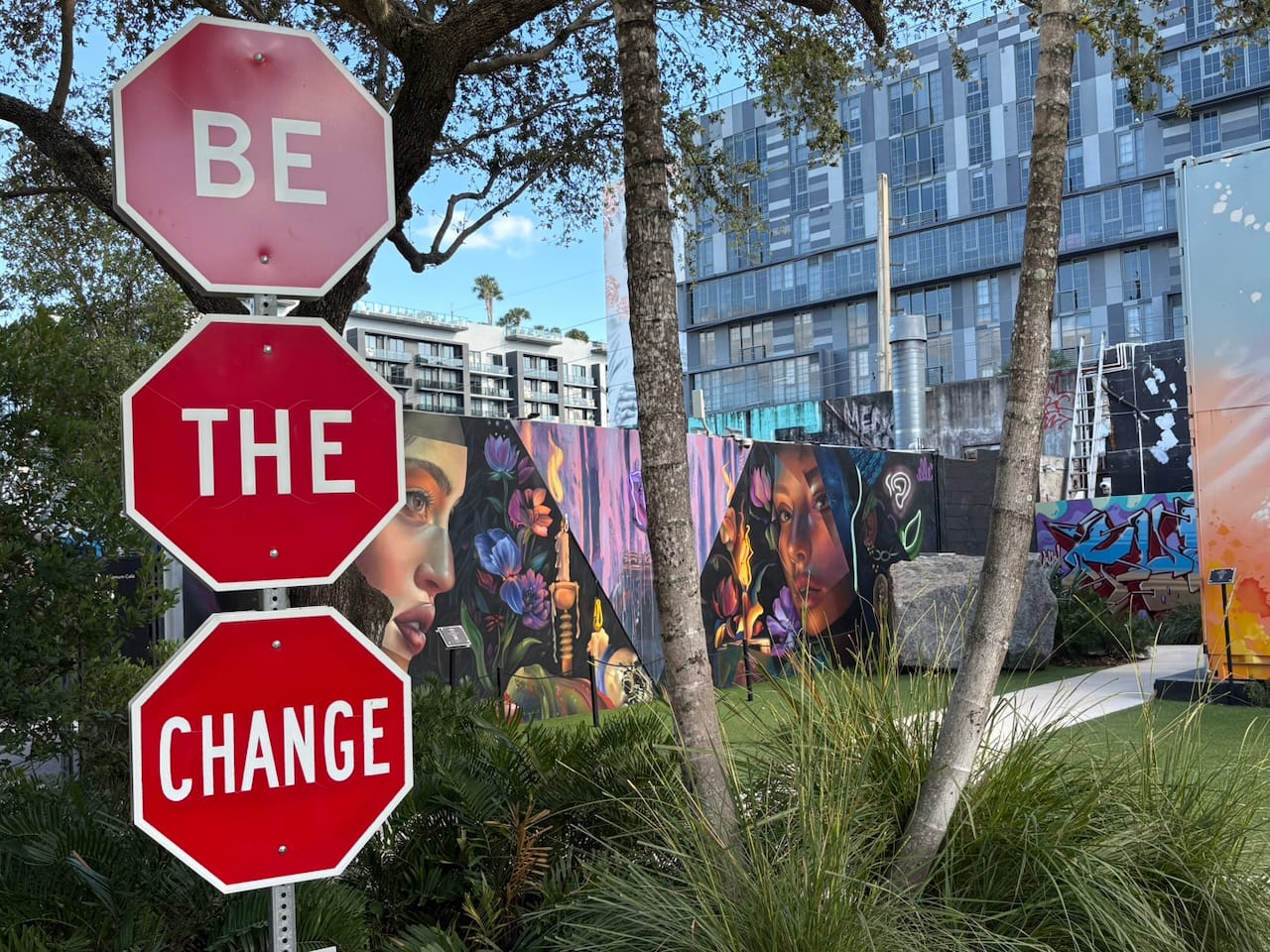
I've just begun my sixth month of Monday-Friday daily resistance actions. I'm frankly astonished at how feeling connected to resistance and aware of how very much resistance is afoot is saving me from despair. Change will come. You can be the change! We are the only way it will come: from our love, our fury, our choice to act.
Rebecca Solnit's Meditations in an Emergency had a fantastic issue last week. "Welcoming the Stranger and Fighting the Power, A Roundup" is a rousing and inspiring read: for hope, for courage.
I've found that people who aren't comfortable with protests or phone calls are often glad to do letter-writing in support of elections as a form of action, and there's an opportunity for that right now. Postcards for Virginia is a new organization to me; I'm passing it on because the recommendation came from a trusted source: Jess Craven, whose Chop Wood, Carry Water is one of my sources of inspiration for daily action. Virginia has a special election in April to vote on redistricting which, if it passed, would swing power toward Democrats with national impact. I've sat up at night writing letters to folks about elections and it lights my spark to feel connected to people across history working in support of democracy.
The next nationwide NO KINGS protest is March 28. I'm signed up to be part of the Safety Team for my local Indivisible chapter who organizes us here. Will you be in the streets?
Supporting Me So I Can Support You
This is entirely human work. My work, done by hand, with my own mind and heart; I do not use AI in the creation of what I offer you. I don't have one. I invest at least half a day every week in the creation of this newsletter. It's a labor of love; I currently earn about $15/hr. I do this because it is important to me, because I hear that it's important to you, and in hopes that it will grow.
If you enjoy my work, you can give me a raise! You could make a one-time donation of thanks of any size. You could upgrade to a paid subscription for as little as $5/month.
If you purchase books from indie Bookshop.org starting at my bookshop, I will receive a commission of 10%, even if those particular books aren't in my shop. I see what was purchased; I do not see who bought it.
Sharing my newsletter is also a gift! Hopefully it enriches the friends you share with and in expanding my reach may expand the compensation I receive for my time. If you're reading this today because you read my sweet friend and student Jessie talking about my warm enthusiasm for half-assing meditation, welcome! I'm hoping to speak to that topic next week in your honor.
If you are a supporter, thank you; I am honored and humbled by your willingness to support my work in the world, and you have put food on my table.