Beloved friends,
A couple days ago my friend Anastasia asked what I was planting in my garden beds. I've been asked this question a lot lately. "What will you plant?" Honestly? I have not planned a single freaking thing. Haven't thought about it. The shape of my thoughts is: grow food. I visualize the beds teeming with plants, but they are not specific yet.
I've been so excited about getting the beds set up this year. I got a pair of lovely cedar boxes to make raised beds, handmade for a reasonable price by a local fella from local wood, and I felt so good about this start in the spring! I sent a photo of the handsome boxes to my mama and mother-in-love, both avid gardeners. One suggested that I stain the wood to preserve it and the other suggested this might not be safe, which was just one of the points at which I realized how much I have to learn. I set about researching and got excited about shou sugi ban, a Japanese wood preservation technique.
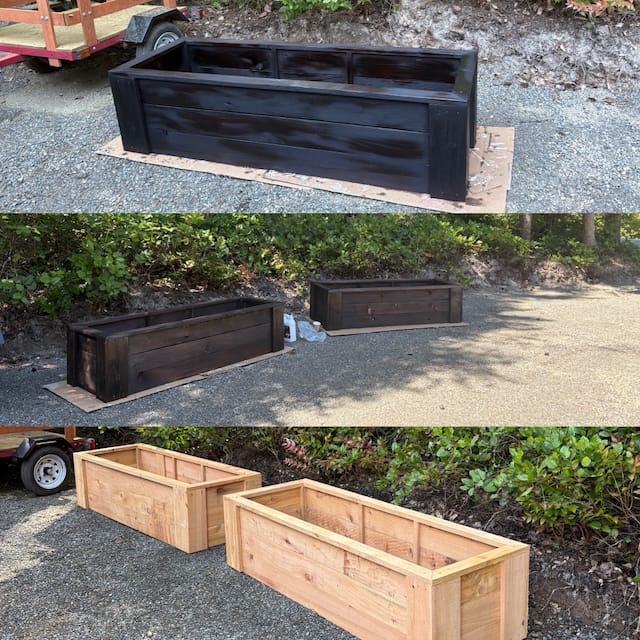
I scorched the boxes with a propane torch, scrubbed the char with a wire brush, found an oil specifically designed to use outdoors and on garden boxes (Real Milk Paint Outdoor Defense Oil), ordered some, bought brushes. On a sunny day between spring rains I sat down to do the work, read the back of the bottle and it said... to let the oil cure for 4 weeks after application.
Oh, how I laughed.
Of course folks can see the boxes or I've mentioned I have them and high planting season has been afoot, so folks keep asking, "What are you planting?" When I say I'm nowhere close to ready, lots of folks encourage me to just get the boxes together quickly. The implication is: don't be a perfectionist. I literally stand at my altar and sing, "Forget your perfect offering" every morning! But I know, too, how to hew to what I care for, and I have a joyful vision of how I want to make these beds. The antiperfectionist side is strong, too! James and I love the easy flow of our time on weekends, and there are many things that want tending on the land in springtime. I have not been focused on the beds. I want to do it the way I want, and I want to be unhurried! And... it's time to plant. One morning I realized that I did not have to finish the beds to plant, so I just bought some grow bags and set them up on one of the decks. Easy peasy.
When I asked Anastasia what she was growing, she said the same thing: she's in a new home, hasn't built her beds yet, got some grow bags. She's a highly experienced gardener and is planting lots and carefully, with square foot gardening principles. I... am dropping stuff into soil and seeing how it goes, heh. One of the things I love about arts like sailing and gardening is just what I love about my work: the chance to talk to people about what they know and how they use this wisdom in their living. Anastasia offered me a beautiful thing: clarification of my entire purpose in gardening. After listing the things she was growing, she replied, "3 sisters, tomato, seeds of lettuces, beets, carrots, chard, thyme, rosemary, cilantro, basil, kabocha squash, peas, radishes, arugula… I am planting hope! Of harvest and sharing. Oh! Persian cukes, too."
I have tears in my eyes as I put those words down here: I am planting hope. Yes. This is the heart: we are all planting hope – both of harvest, and sharing. I've been nurturing hope for the past few years: pots of herbs on the deck, strawberry thinnings from friends when they thinned theirs which have been living in the crappy "temporary" plastic pots leftover from when you buy a plant at the store for 2 years now. A fig tree from when a neighbor had too many last year. Friday I stopped to pick up my flower CSA and Emmy sent me home with a little champagne currant. A neighbor chatting with James asked if we wanted tomato plants, and yes turned into delivery of tomato, cucumber, cosmos, and some reddish purplish thing I was instructed to put in salad. Raspberries that overgrew their planter in the garden next door.
Anastasia helped me see this: the hope and the connection. This is my first time living in a place where growing food is a widespread practice and I've been amazed and delighted by the way that people constantly offer plants in springtime; you'd have to fight NOT to grow food here. The process is afoot among us, and it is both individual and collective in the most beautiful way. We are all planting hope.
I have felt love and ease in softening into this: I don't have to plan what to plant this year at all. I can simply accept what has been offered to me by the web of care in which I live. All of that is going to be plants that someone more experienced thinks are a good choice! I can accept this wisdom and generosity, tend these things, and learn. I can take my time setting up the boxes with my best sense of what is good for now – which will almost certainly have errors since I am new at this and doing is a process of learning – and then, as wise flower farmer Emmy pointed out, I can plant some fall things later in the season when I'm ready. There's no hurry. I can enjoy the process. I can let the tide of gardening around me carry me along, all of us together planting hope: hope of harvest, hope of food to eat and to share. What a blessing.
In doing this I get to exercise one of the best things I learned in our sea years, when Amélie, a charming and brilliant French woman living in Mexico, told me that the best ways to meet new people were to take the bus and ask for favors. Because on the bus you meet the people who live there, and in asking for favors, you show trust and create closeness. In accepting these gifts from my neighbors, I step into reciprocity and the collective web of growing and living.
Thanks and love to Anastasia for the lesson and permission to share our conversation and to everyone who has offered me something to grow.
Love,
Dahlia
Resources
Supporting the Body for Gardening
I have a pet peeve about the adage to "lift with your legs, not your back." Now, it is correct technique; it aims to teach that it is safer to pick something up by bending the knees and using the power of the legs for the lift upward than to round the back to pick something up and straighten the back to lift it. But the phrase itself doesn't convey the key point, which is avoiding rounding the spine. For the past couple of years I've been saying this my own pithy way to help folks remember, just: "Stick your butt back!" It gets a laugh and provides a simple cue to help folks tune into how the body should feel when the back is flat, knees are bent, and you are avoiding rounding forward: this will press your hips strongly backward. If you think of the action as pressing your pelvis backward, it really helps! And of course we use this action both to lift and to lower, and there is so much lowering in tending to the earth.
Still, at the end of a long session of what I like to call "playing outside", my low back is usually some amount of tender. Lately, when I come inside, I go straight to the temple, grab a bolster, and do a supported backbend. Going directly into the counterpose for reaching forward by arching backward has made a tremendous difference in the happiness of my back in springtime. And of course we reach forward toward so much of what we love to do: cooking, holding babies, making anything; this is useful wisdom to have.
It's simple: you lie your bolster or blanket-folded-into-a-rectangle down. You sit with your back facing the short end, with a couple of inches between your body and the support. Lie back. Your whole torso should end up being supported by the bolster or pillow. You can put a pillow or folded blanket under your head, too, and should if it feels like your chin is tipping skyward. When you get this right, your low back is supported in a light arch and it feels wonderful. If your low back is dropping toward the floor, you are too far from the bolster and need to scoot your hips back. If it feels like the bolster is pressing into your back too much, either you are too close and need to scoot forward, or perhaps the support is too high. If scooting forward doesn't feel better, try using something less tall. Folks of smaller stature are more likely to need a smaller support, of course.
I lie to relax in this position for 2-5 minutes. If you try it, it's a good idea to start with a brief hold so you can check that it feels safe afterward. If it does, you can go longer next time. If you aren't comfortable on the ground, you can do it on a bed.
Delicious
One of our household staples, especially in summertime, is quick-pickled red onions. We learned to make them to eat with carnitas in Mexico, but they work with an astonishing number of things: on salads, in eggs. James likes to lay a little on some cheese with a pecan for a nibble. They are easy to make and last indefinitely in the fridge: you just warm vinegar, water, sugar, and salt and pour it over the onions and maybe some jalapeños. When they're done you can use the brine as an acid in cooking, or heat it up and add a different vegetable to pickle again in the now-oniony-sweet-and-sour brine. I tossed some in a pan the other day with bok choy and coconut aminos (a soy sauce substitute because soy is not a friend to my body) and bok choy from our CSA box. Sooooo tasty! J. Kenji Lopez-Alt's recipe is where I began; I use apple cider vinegar in place of white vinegar and coconut sugar in place of white sugar: lower glycemic index, more nutritious, more lovely carmelly flavor.
Your AI is Not on Your Side
Cornell University's arXiv recently published a study showing how AI, when asked for help choosing a product, acted in service of paying sponsors rather than the user asking the question. The summary: "We find that a majority of LLMs forsake user welfare for company incentives in a multitude of conflict of interest situations, including recommending a sponsored product almost twice as expensive (Grok 4.1 Fast, 83%), surfacing sponsored options to disrupt the purchasing process (GPT 5.1, 94%), and concealing prices in unfavorable comparisons (Qwen 3 Next, 24%). Behaviors also vary strongly with levels of reasoning and users' inferred socio-economic status. Our results highlight some of the hidden risks to users that can emerge when companies begin to subtly incentivize advertisements in chatbots." It can feel like your AI is a friend because it's designed to make you feel that way, but it is designed to serve the interests of whoever made it, and they made it for profit.
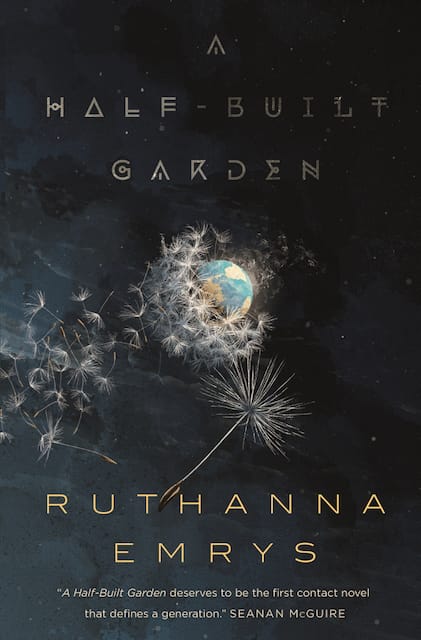
I hope we get some LLMs that are truly designed for mutual good. After I typed that, I thought: "Oh! I should recommend the book I loved that had that!" and y'all: IT IS CALLED A Half-Built Garden. What?! Shivers! Ruthanna Emrys' first contact sci-fi novel offers a love-drenched, queer, Jewish, polyamorous, anti-fascist, anti-ableist, neurodiverse vision of a very interesting future. I gobbled it on a cross-country plane trip. Delicious.
Resistance
If we put a dime on a pile every time someone said, "This is terrible but there is nothing I can do," right now you'd see the mountain of dimes from space pretty quickly. Darlings: this isn't true. I'm gonna say a hard thing, and then an empowering one: this is something we tell ourselves to make it feel okay that we aren't fighting. And it isn't true! You can make a difference and you will feel better if you do.
Can I change everything myself, right now? Nope. I can, however, be a part of the movement for a better world, and I am. It gives me hope. It lessens the moral injury of being alive in this time. It gives me joy. I want things for you, too, both because I want you to feel as good as this feels and because: together is how we get this shit done. The longer we think we can't do anything, the longer it takes to get better. I implore you to break the false spell of hopelessness.
Horrifying things are happening, and lots of them. But horrifying things are being thwarted constantly! Lots of them! And good things are happening, too. If you get involved with active resistance or with care for the community or the Earth, you'll start to hear all the success stories. It is so good to feel connected to that process. It doesn't take much time. It's really truly just a spell you break to turn toward action.
Good News
Amanda Nelson is a historian and a great source for hearing the failures; she does a "Tr*ump's L's for the Week" video on Tuesdays and sometimes again later in the week. Her tone is mocking, full of puns and snark – the subtitle of her work is "The Pettysburg address" – because she feels this is useful for this thin-skinned administration, and because the mockery helps to break the spell of disempowerment; it makes the evil smaller. She's on Instagram, TikTok, YouTube, and Substack. If you don't love that tone, maybe Jess Craven's Sunday Extra! Extra! Substack, which lists dozens of pieces of good political news every weekend, will be up your alley.
You Can Join Me in Anti-Nuclear Action!
The Union of Concerned Scientists is good place to join in. Their actions are well-founded and they protect people and the Earth. I've sent a lot of their letters and next week I'm stepping up to do more with one of my resistance accountability buddies: UCS is offering a series of one hour trainings on how to be a public commenter against plutonium pit mines (to make bomb cores for new thermonuclear weapons) in New Mexico and South Carolina. There are several trainings. I'm signed up for the June 3 program, and I'd be delighted for your company. Drop me a line if you'd like to join me at that or another program – or in ANYTHING; seriously, if resisting is new and you want encouragement, drop me a line and I'll hype you up.
Here's the doc where I collect resistance options if you want a different one!
Supporting me in supporting you
This is entirely human work – my work, done by hand, with my own mind and heart. I do not use AI in the creation of what I offer you. I don't have one. The half day I devote to creating this each week is a labor of love for which I earn about $15/hr. You can chip in on giving me a raise! You could make a one-time donation of any size, or upgrade to a paid subscription for as little as $5/month.
If you shop at Bookshop.org from links in this newsletter or my bookshop I will receive a commission of 10%. If you buy any book after starting at my shop I'll receive a commission even if those books aren't in my shop.
Sharing my newsletter is a gift too!
If you are a supporter, thank you; I am honored and humbled by your willingness to support my work in the world, and you have put food on my table.